
China launched four rockets into orbit within 45 hours on September 15 and 16. These missions from three sites used both state and private companies to deploy satellites. This rapid pace showed how Beijing is building its satellite-internet infrastructure. These launches proved that China can send many spacecraft into space.
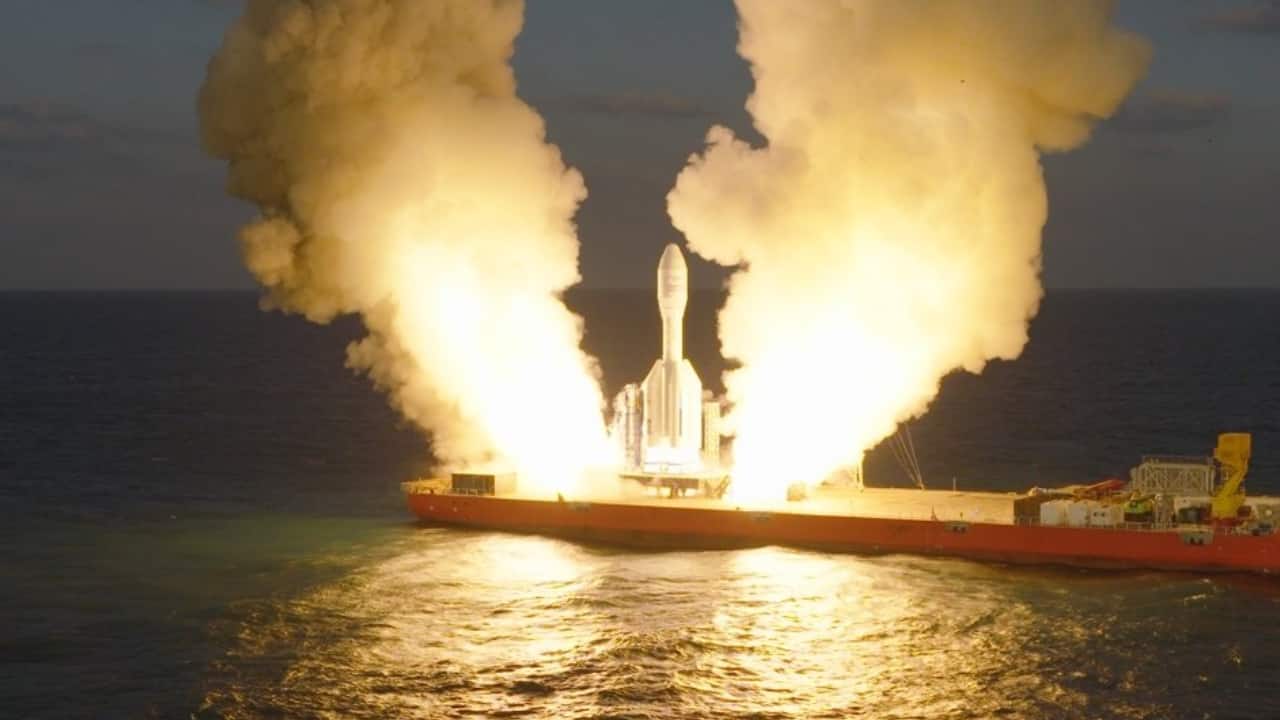
China has completed an extraordinary burst of space activity, launching four different rockets in roughly 45 hours from three separate launch sites on September 15 and 16. The missions involved both state-backed programmes and private Chinese space companies. More importantly, all four rockets successfully reached orbit and delivered satellites, highlighting China's growing ability to conduct launches at a high frequency. 4 Rockets In 45 Hours: What Happened In China? The rapid launch sequence began with LandSpace's Zhuque-2E, which lifted off from Jiuquan on September 15 and deployed 10 satellites for a broadband constellation. Next came Orienspace's Gravity-1, launched from a sea-based platform near Shanghai. It carried another batch of satellites. A Long March 12 then launched from Wenchang, carrying satellites for China's SatNet broadband programme. The fourth mission involved a Kuaizhou-11, launched from Jiuquan with two Earth-observation satellites. 🚀 Gravity-1 Y3 🕣 22:00UTC September 15 📍 East China Sea 🛰️ SpaceSail Group 26, EUHT https://t.co/8ZGtCLtquK pic.twitter.com/rkm3HW59RQ -- CNSPACE (@CNSpaceflight) September 16, 2026 Were These Rockets Actually Sent To Space? Yes. All four were orbital launches. This was not a series of rocket tests or launches that stopped short of orbit. The vehicles successfully carried their payloads into space. The four missions also used different rocket families, launch infrastructure and operators. Two of the four launchers were developed by private Chinese companies, showing the growing contribution of commercial firms to China's launch sector. Why Did China Launch These Rockets? A major reason is China's rapidly expanding satellite-internet infrastructure. The Zhuque-2E and Gravity-1 missions carried satellites linked to the Qianfan, or SpaceSail, constellation, while the Long March 12 mission supported SatNet. These projects involve thousands of planned satellites. Building such networks requires rockets to launch frequently and reliably rather than only a few times each year. China therefore needs a launch industry capable of putting large numbers of spacecraft into orbit at a sustained pace. Does This Signal A New Space Race? The four-launch streak points to an important change in the global space industry. Space powers are no longer competing only to build the biggest rockets or reach the Moon first. Launch frequency, satellite constellations and commercial launch companies are becoming increasingly important. China's latest sequence demonstrates how government programmes and private companies can operate alongside one another across multiple launch sites. However, there is one important limitation. The four rockets in this particular 45-hour sequence were not recovered for reuse. So the achievement demonstrates high launch cadence, but not a comparable cadence of reusable rockets.