
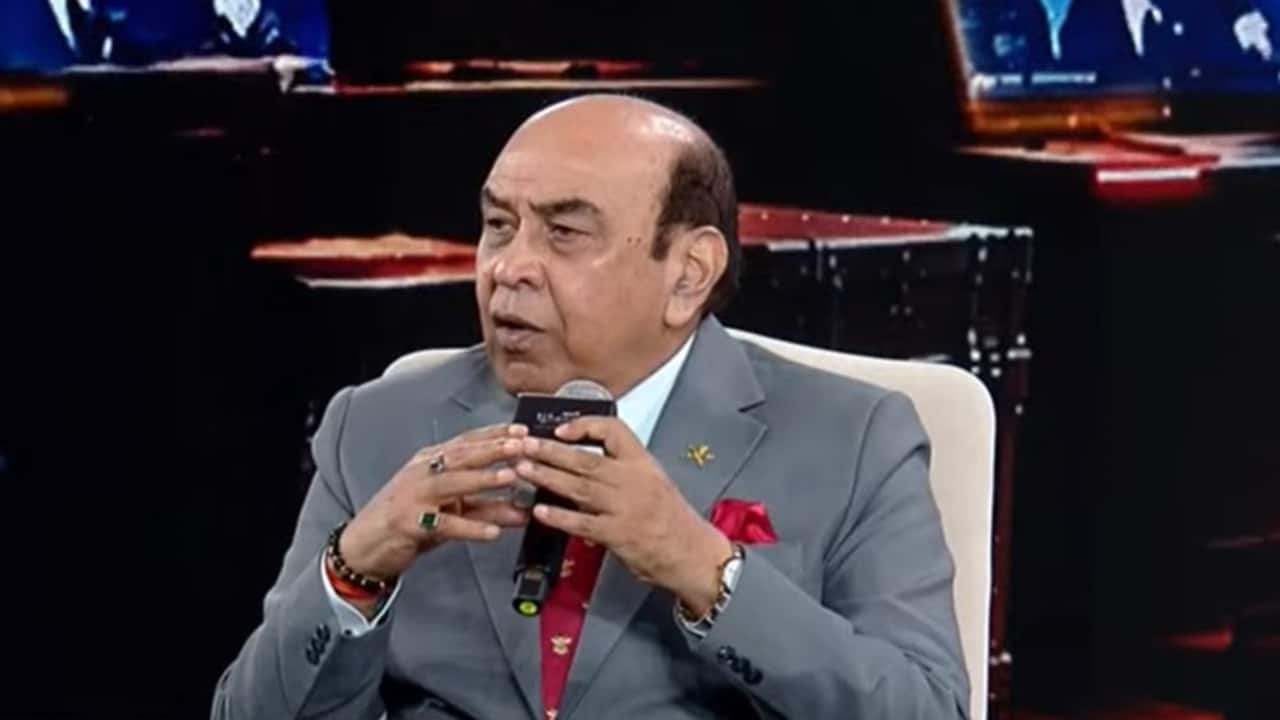
Bihar Governor Lt Gen Syed Ata Hasnain (Retd) said on Thursday that Iran has not lost its war with the US. Speaking at News18 DEFCON 2026, he noted that Iran uses resilience as a key strategy. "You may keep hitting us but we have the resilience to continue," he said.
Bihar Governor and former Army commander Lt Gen Syed Ata Hasnain (Retd) on Thursday said Iran has not lost its ongoing war with the US, arguing that Tehran's ability to withstand sustained military pressure and project resilience has become an important part of its information-warfare strategy. Speaking at News18 DEFCON 2026 in New Delhi during a session on "The Battle for the Mind: Information Warfare & National Resolve", Hasnain said Iran's approach to the conflict goes beyond the battlefield and involves maintaining the country's sense of dignity and resilience in the face of attacks. Discussing his observations from Iran, where he said he had spent around 10 hours in Tehran, Hasnain said the country's response to the conflict should also be viewed through the lens of information warfare. He said Iran's messaging was not necessarily about denying the military pressure it was facing, but about communicating that the country could continue to withstand it. "You may keep hitting us but we have the resilience to continue," Hasnain said, describing what he saw as a key element of Iran's information-warfare approach. 'US military capability has not made a difference' Hasnain said the US has sought to project its military capability during the conflict, but argued that this has not translated into a collapse of Iran's ability to sustain resistance. "The US has been attempting to project their military capability but it has not made a difference," he said, adding that the campaign had not compromised Iran's capacity to withstand the pressure. He further argued that the way the US has attempted to project the impact of its military operations has not necessarily produced the intended effect globally. "The world is not believing the US narrative that it has decimated Iran's Army, Navy and Airforce. US' messaging of the Iran war is not delivering the way it should have delivered." His comments come as the US-Iran conflict continues to combine military operations with an intense battle over narratives, with both sides seeking to shape perceptions of the course and consequences of the war. 'Not the weapon, but the soldier' Hasnain also attributed Iran's resilience to factors that extend beyond its military hardware. "I have been studying Iran since 1992," he said, pointing to the country's long-term efforts to acquire and stockpile weaponry from countries including North Korea, China and Russia. Calling the Persian civilisation a strong knowledge base, Hasnain argued Iran's strength cannot be assessed simply by counting its missiles or other weapons. He also pointed to Iran's experience in developing proxy networks across the region, saying the country's influence had evolved through concepts and strategy rather than simply through "missiles" or "soldier-on-soldier" confrontation. For Hasnain, the broader lesson from the conflict is that the effectiveness of a military campaign cannot be assessed only through the destruction of weapons or infrastructure. The ability of a state and its population to absorb pressure and sustain national resolve can also determine the outcome of a prolonged conflict.