
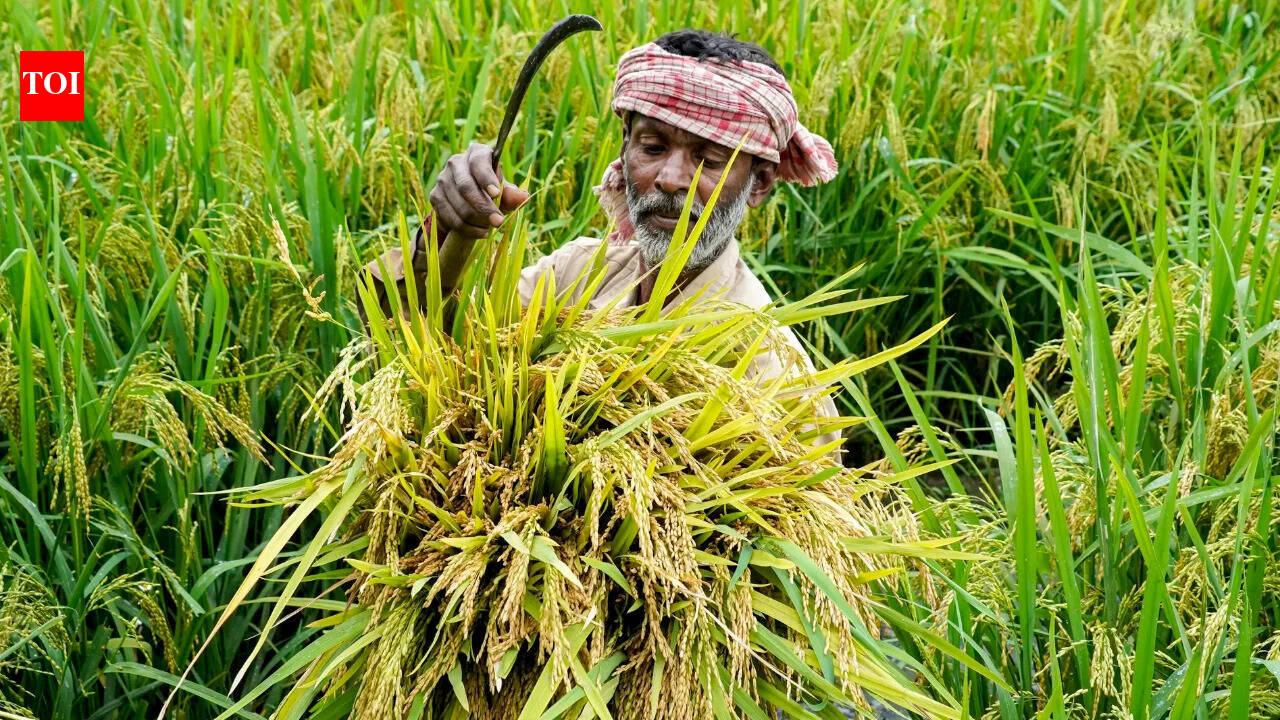
The Centre discussed contingency measures on Monday to protect rabi crops from potential drought. Union agriculture minister Shivraj Singh Chouhan called for data-driven planning and better coordination between states. Officials plan to promote pulses and oilseeds that use less water, as teams head to Karnataka and Maharashtra to assess conditions.
Centre gears up for weak rainfall, orders data-driven plan to safeguard rabi crops
NEW DELHI: Apprehending the possibility of deficient rainfall in the upcoming sowing season, Centre Monday discussed contingency measures to minimise its impact on rabi (winter-sown) crops, with Union agriculture minister Shivraj Singh Chouhan calling for data-driven planning, stronger Centre-state coordination, weekly crop monitoring, balanced fertiliser use and water budgeting. Amid indications that the kharif (summer-sown) crops' output may not match last year's level despite progress in acreage, the minister, while addressing farm scientists and policymakers at a national conference, also emphasised the need to drive the rabi strategy through less water-consuming pulses and oilseeds.
Join conversation
Share your thoughts in the comments
Be respectful · TOI community guidelines
The conference was convened to discuss the farm strategy, keeping in view the current drought situation in many states so that low moisture content in the soil and shortage of water for irrigation due to deficient rainfall do not impact farming significantly. The sowing of rabi crops such as wheat and mustard begins in Oct. Centre will send teams to Karnataka and Maharashtra to assess the drought situation. Nearly two-thirds of Maharashtra has been affected, and the state has already declared a drought, while Karnataka is also facing drought-like conditions due to a monsoon rainfall deficit of 30%.